
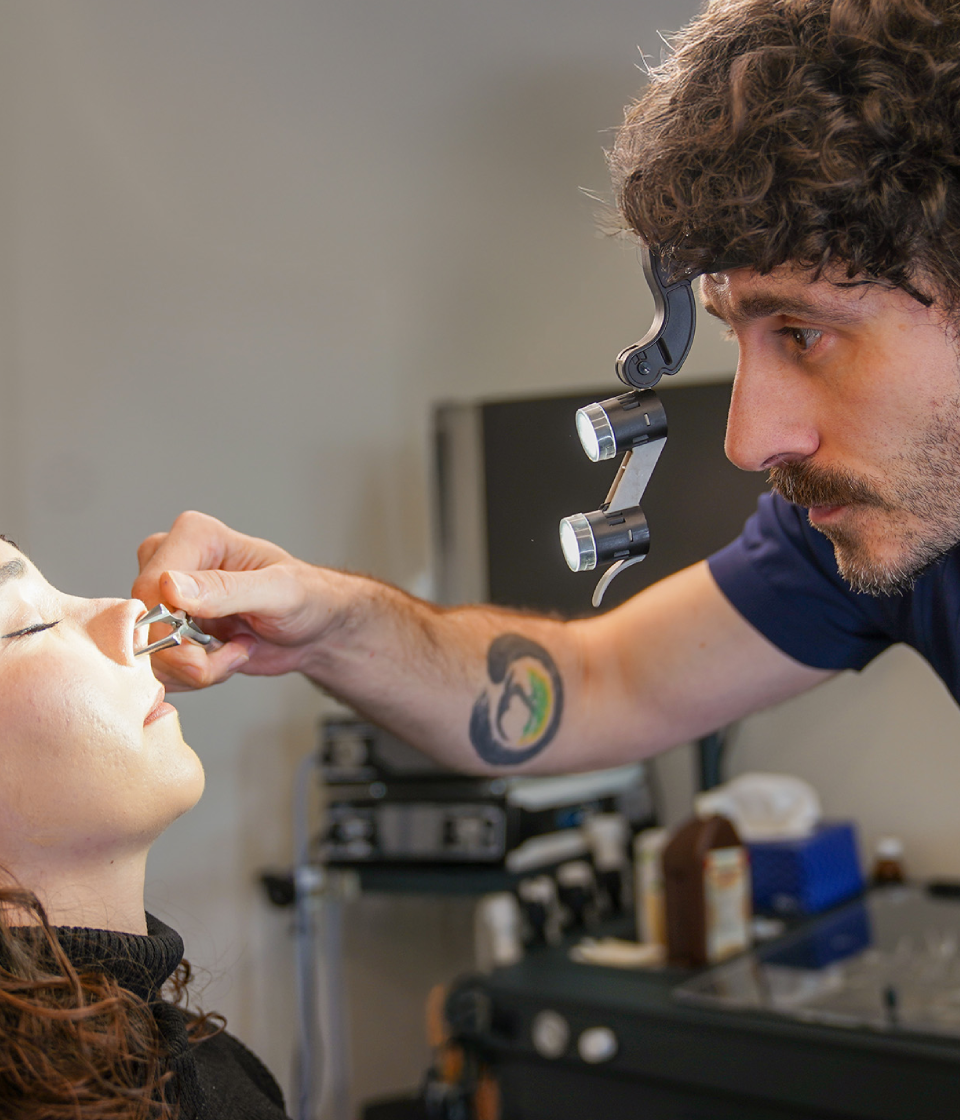
Ultrasonic piezo rhinoplasty is an advanced technique in which bone work is performed using ultrasonic vibrations rather than traditional chisels and mallets. This approach offers significant advantages for both surgeon and patient.
How Does the Piezo Technique Work?
The piezo device generates ultrasonic vibrations that act selectively on hard tissue (bone) only. Nerves, blood vessels, and soft tissue remain unaffected during the procedure, resulting in considerably less bruising and swelling compared to conventional rhinoplasty.
Who Is a Good Candidate?
The piezo technique is particularly suited to cases requiring dorsal hump reduction, narrowing of the nasal base, or precise shaping of nasal bones. Cases involving cartilage corrections only may be addressed with classic techniques.
Piezo vs. Classic Rhinoplasty
In traditional rhinoplasty, bone work is carried out with osteotomes and a mallet, which may affect surrounding tissue. The piezo technique minimises this impact. It is important to note that the most appropriate method is determined through individual assessment during consultation.
Surgery and Recovery
Ultrasonic piezo rhinoplasty is performed under general anaesthesia and takes 2 to 4 hours. The recovery process is broadly similar to classic rhinoplasty but is typically associated with less bruising. The final result becomes clear between 6 and 12 months post-surgery.
To find out whether the piezo technique is right for you, request an initial consultation.